
Coming Home to myself
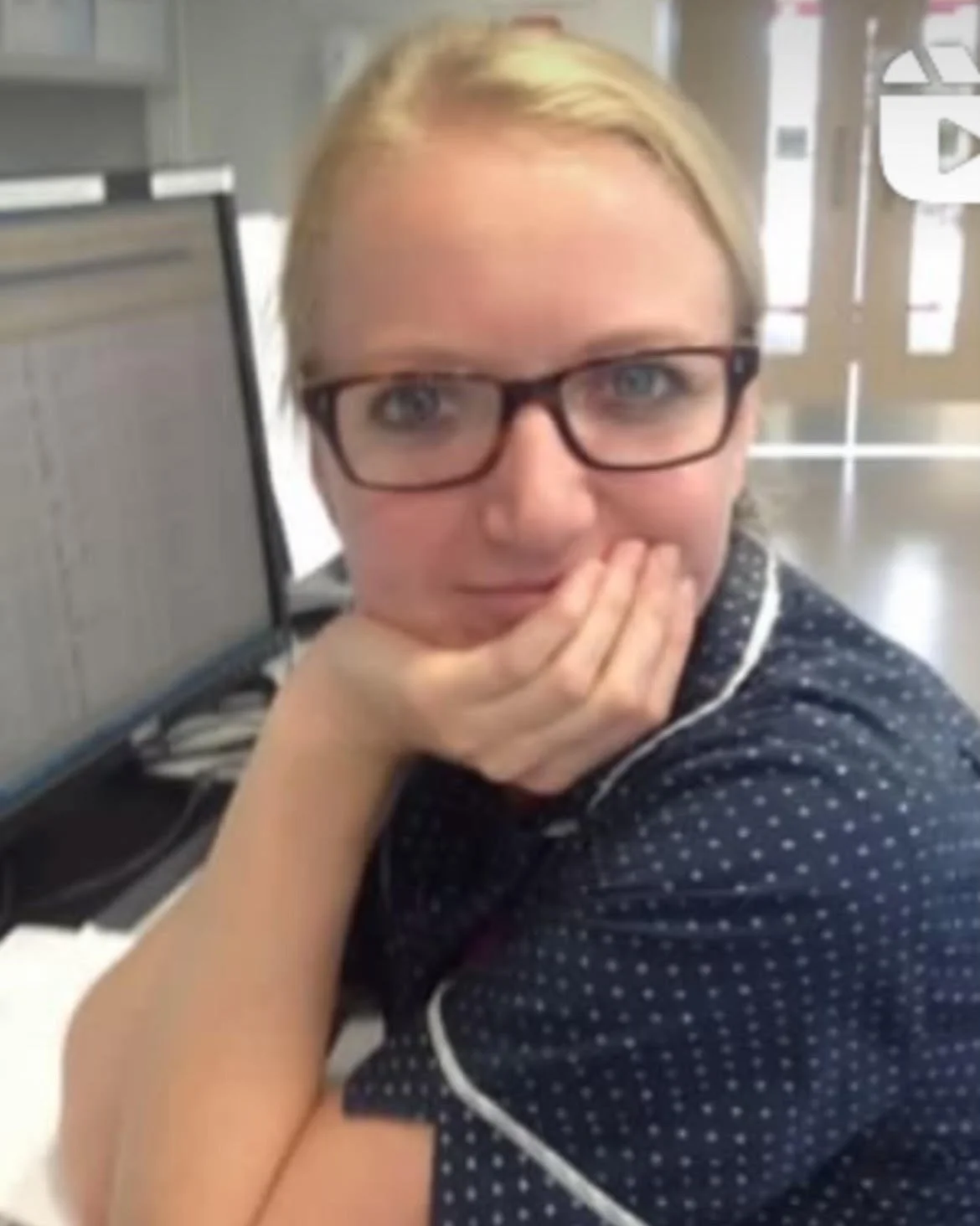
Sister Banting at Georges A&E Tooting. Circa 2013
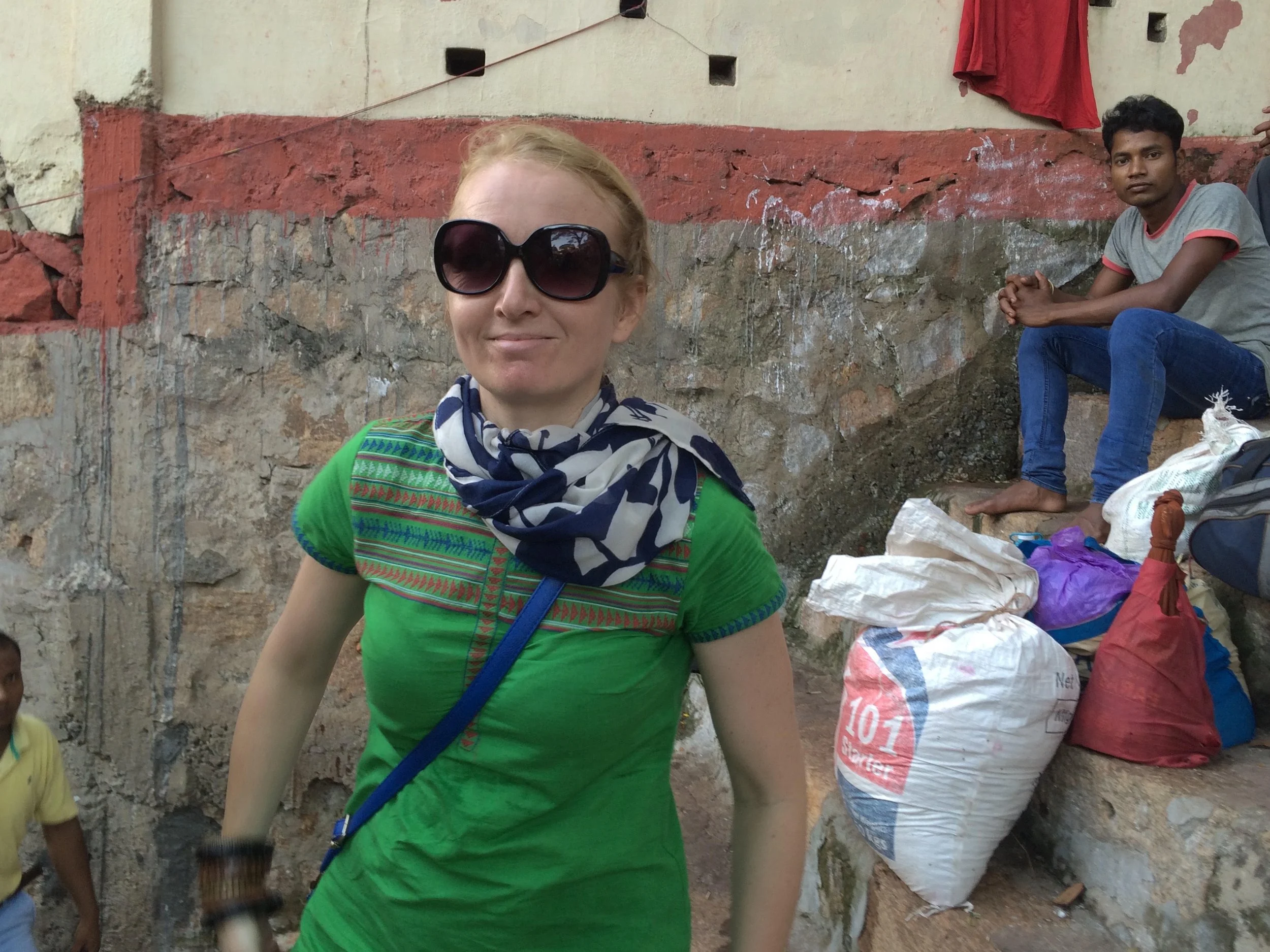
My first or Second date with Raj. Kamakhya Temple just after Ambubachi Mela. One of my first introductions to Indian Sadu’s.
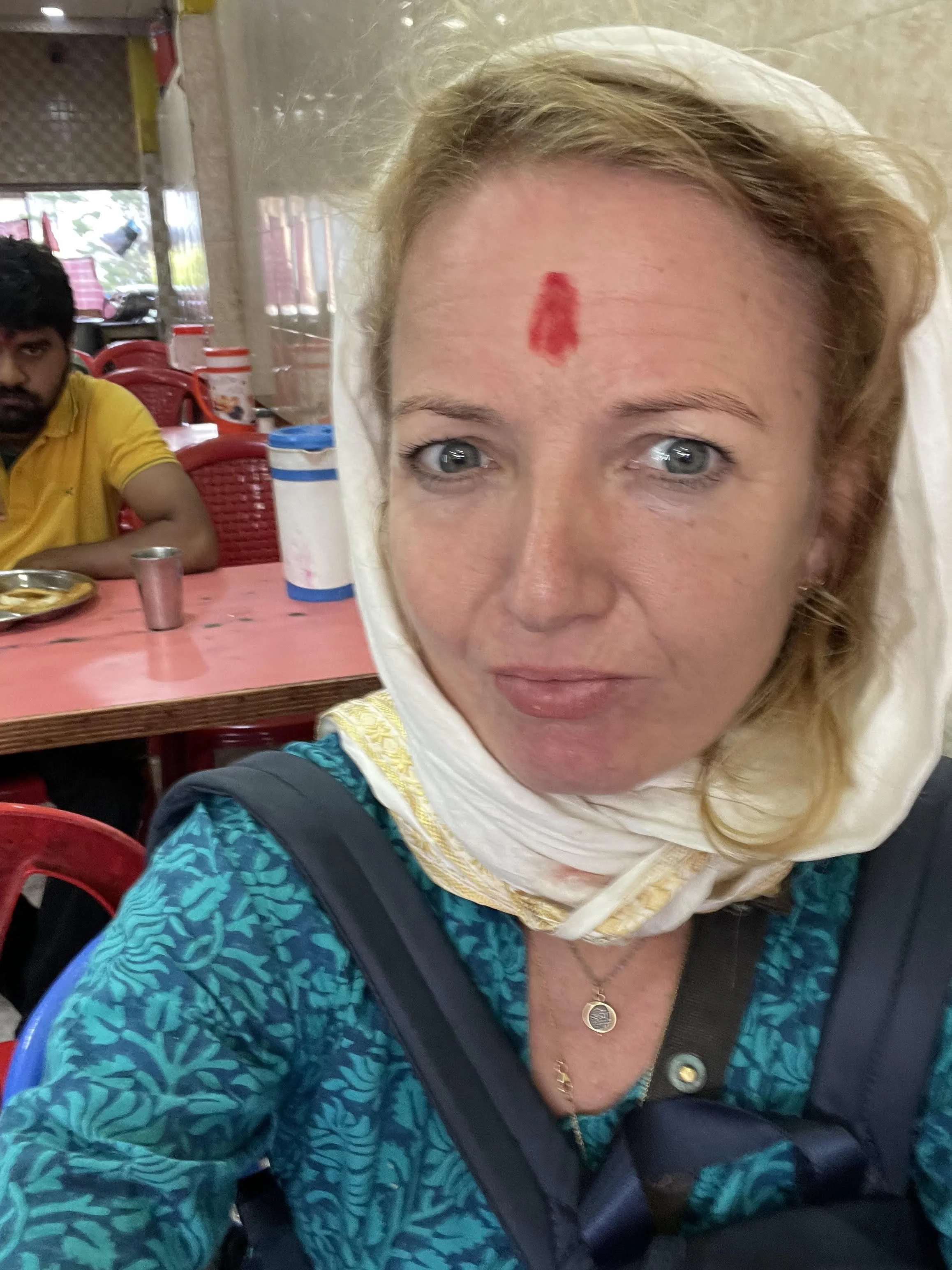
One of my last visits to Kamakhya and Guwahati. Obligatory chai and samosa.
Having returned to my birth country and started a rather sweet little job caring for people in the community, I’ve found myself thinking a lot about my nursing career.
And the surprising thing is that I realise there are many things I miss about nursing.
I miss being surrounded by ridiculously intelligent doctors and nurses. I miss the comradeship, the teamwork, the banter. I miss that feeling of everyone pulling together when things suddenly went from ordinary to extraordinary.
I miss the saves.
I loved when someone came into resus desperately sick and, somehow, together, we turned them around. A&E could go from zero to a thousand in a matter of minutes.
One of my favourite memories is of Kirsty Yeong enjoying a slow Sunday afternoon in majors when, suddenly, a gunshot wound was pushed through the doors by his mate.
There was something about that intensity that suited me.
I suppose, in some ways, I miss the adrenaline.
I don’t miss the government control. I don’t miss feeling like a pharmaceutical pedlar. I don’t miss twelve-hour shifts, night duties, managing staff, dealing with sick calls, juggling skill mix or the bone-deep exhaustion.
But what I miss most of all is the patients.
That feeling of being of service.
And this is the funny thing about where I find myself now.
Driving around the community, simply caring for people in their homes, is an absolute pleasure.
There is no resus phone. No fluorescent-lit department. No skill-mix daily juggle. No one calling in sick at 6.45am.
It’s just me, another human being, a cup of tea and a conversation.
One of my clients jokingly told me the other day that I have a retirement job.
I do.
And I bloody love it.
It also gives me plenty of opportunity to chat for hours and flirt with old men, which has always been one of my favourite pastimes.
Looking back at who I was ten years ago, I realise I was essentially burned out and, in many ways, a little broken when I left nursing.
It took a knee injury during my first teacher training to give me the space to realise that I was caught on a hamster wheel.
But the truth is, nursing had been slowly chipping away at my soul.
When you spend years witnessing death, suffering and trauma, something happens. You develop ways of getting through it. You become incredibly functional. You learn to compartmentalise. You become numb you block you dissociate.
You have to.
I filter everything through astrology. I have a Scorpio Moon, and Intensive Care and A&E seemed like almost perfect jobs for that part of me — highly intense environments, crisis, transformation, life and death.
Perhaps my nervous system liked the intensity.
Or perhaps I had simply become very, very good at surviving it.
There was remarkably little real debriefing for nurses after witnessing traumatic events. Sometimes support was offered, but the nursing staff were often too exhausted to engage with it.
We just carried on.
Now that I understand my neurodivergence better, I look back and wonder how I held it together for so long.
I’m not officially diagnosed with ADHD or autism. I know I am dyslexic, and I recognise many traits of ADHD and autism in myself. I don’t feel that pursuing an official diagnosis is going to change anything for me at this point. I already understand myself differently, and that understanding has helped me recognise what I need.
A&E is, in many ways, a brilliant ADHD job.
I am exceptionally calm in a crisis. Something happens and I switch into this eerily calm cruise control. Everything becomes clear. I know what needs to happen and I just do it.
Ask me to fill in an online form or create a spreadsheet, however, and you may witness an entirely different woman.
And this is where AI has been a complete game changer for me.
For someone who struggles with executive function, having something that can help organise my thoughts, break tasks down and turn the chaos in my head into something manageable has been enormous.
For years I thought I simply needed to try harder to be organised. I’m realising I often don’t need more discipline — I need the right tools.
AI has become a kind of executive-function assistant for my brain.
I’m also very aware that AI isn’t without its problems. The energy and water required to run these systems have a real environmental cost, and I think we need to be honest about that as we embrace the technology.
For me, it’s about using a tool thoughtfully rather than pretending it comes without consequences.
And perhaps this is why I look back at nursing with such a different perspective now.
At the time, I didn’t understand how much I was asking my brain and nervous system to process every single day.
Twelve-hour shifts. Artificial lights. Hundreds of sick people. Constant noise. Constant decisions. Constant social interaction.
I could function brilliantly in the crisis, but functioning isn’t the same as being okay.
Looking back, I wonder if I spent years in some kind of survival mode.
I left the UK for India at the end of 2014 and continued nursing for a charity for a short while. That job took me to Assam.
I landed in the ancient lands of Assam and was immediately held and welcomed by the community there. The community and my life Assam deserves it own piece.
In many ways, Assam transformed me.
It gave me somewhere to rest and connect with raw nature.
It gave me space to recover and, perhaps most importantly, space to find myself away from the cultural conditioning and the stories I had attached to who I thought I was supposed to be.
For the first time in a long time, I could breathe.
I couldn’t work for a while, and instead I had the extraordinary luxury of having time.
Time to practise yoga.
Lots and lots of yoga.
What started as a yoga class in a gym in 2006 had become something much deeper.
That first class had been one of the only places where I experienced even a little peace. The constant chatter of my mind slowed down.
So I started chasing that feeling.
Yoga became another special interest, and eventually a way of life.
It was a tiny doorway that changed the entire trajectory of my life.
They say that yoga is a path, and once you start walking it, it takes you places you could never have imagined.
My daily practice is now a ritual that keeps me regulated, aligned and connected to my own version of divinity.
And I understand myself so differently now.
I know that I need solitude like I need air.
I know that too much stimulation, too many people, too much noise or too little recovery time can push me towards overwhelm.
I know that I feel things deeply.
Astrologically, my Mars is in Pisces in the 12th house — a placement I still describe as being a bit crappy!
But it makes sense to me.
I am porous.
I pick things up.
I feel the atmosphere in a room. I absorb the undercurrents between people. It makes me a good caregiver and, I think, a good teacher.
But sensitivity is exhausting when you don’t know how to regulate it.
Growing up in a house full of people, I struggled to know what was mine and what belonged to everyone else.
I had no language for nervous-system regulation. I didn’t understand why I became overwhelmed.
I was simply labelled chaotic.
And, to be fair, I was.
I was a chaotic teenager. I was a chaotic twenty-something.
I could fly off the handle. I could party. I could drink. I could eat. I could spend money I didn’t have.
I had plenty of strategies for temporarily making myself feel different.
They just weren’t particularly helpful in the long term.
Alcohol, hangovers and guilt often arrived as a little package deal.
Now I understand that many of the environments I had learned to navigate so successfully required me to mask.
I can walk into a room and appear completely at ease. I can work the room and talk to almost anyone. I seem to be really good at it.
But seeming good at something doesn’t necessarily mean your having a good time.
Underneath that, I am processing hundreds of things at once — the atmosphere, people’s tone, relationships, noise, lights, everything.
Afterwards, I need to disappear.
Sometimes for hours.
Sometimes for days.
I genuinely love people.
And yet I also need enormous amounts of solitude.
My Human Design profile is a 2/4 — the hermit and the connector — which feels almost comically accurate.
For years I thought there was something wrong with this contradiction.
Now I don’t.
I think I simply have different needs.
And when those needs aren’t met, I can become overwhelmed to the point of what I now recognise as a neurodivergent meltdown.
That realisation has changed how I see my younger self.
When I look back at the young woman who left the UK for India, I feel enormous compassion for her.
She wasn’t deliberately being difficult.
She wasn’t weak.
She wasn’t failing at adulthood.
She was trying desperately to fit herself into a mould that she simply wasn’t designed for.
And she exhausted herself trying.
The amount of guilt and self-flagellation I carried was enormous. I was ashamed of behaviours I didn’t understand and couldn’t always control.
I didn’t have the language for what was happening to me.
So I blamed myself.
Hindsight really is a wonderful thing.
I’m also beginning to notice this pattern within my own family.
I come from what I jokingly call a very neuro-spicy family. There is autism on my dad’s side and dyslexia and ADHD on my mum’s side.
Some of us are neurodivergent and some aren’t.
Neither is wrong.
We simply need different things and experience the world differently.
And this is one reason I find the phrase “everyone is a little bit on the spectrum” frustrating.
Everyone is human. Everyone has quirks. Everyone struggles with something.
But neurodivergence isn’t simply a collection of personality traits that everyone shares a little bit of.
My intention in writing this isn’t to have a conversation about what causes neurodivergence. That’s a much bigger and potentially very volatile conversation.
I’m simply sharing my experience and what I’m noticing now, with the benefit of hindsight.
There is something incredibly liberating about finding a framework that makes sense of experiences you spent years judging yourself for.
I don’t want to romanticise neurodivergence either. There are real difficulties.
But there are also things I wouldn’t trade: the intensity, the pattern recognition, the creativity, the sensitivity, the ability to stay calm when everyone else is panicking, and the capacity to disappear down a subject and emerge three days later knowing everything about it.
Astrology is one of those subjects for me.
Yoga is another.
Perhaps these aren’t random interests. Perhaps they are also ways I have learned to understand and regulate myself.
And I think there is a spiritual dimension to all of this too.
I don’t necessarily mean that neurodivergence has a spiritual cause. I don’t know that.
But I do wonder whether some of the things we are taught to see as flaws can also become doorways into a deeper understanding of ourselves.
Yoga certainly became that doorway for me.
It taught me to listen to my body before I had the language to understand what it was telling me.
India gave me space.
Yoga gave me a practice.
And now, years later, I find myself back in my birth country, caring for people again.
Just not in the way I imagined.
And perhaps that’s the beautiful thing.
I thought I had left nursing behind.
What I’m discovering is that perhaps I didn’t need to leave behind the part of me that loved caring for people.
I just needed to find a way of doing it that didn’t cost me myself.